How Much Sleep Do You Really Need?
How Much Sleep Do You Really Need? Age-By-Age Sleep Chart Backed by Science
Sleep is one of the most powerful yet overlooked pillars of health. Alongside proper nutrition and regular exercise, quality sleep plays a critical role in maintaining physical health, mental clarity, emotional stability, and long-term wellbeing.
Yet many people still ask a simple question: How much sleep do you really need?
The answer is not the same for everyone. Sleep requirements vary depending on age, lifestyle, health status, and genetics. However, global health authorities such as the CDC, the National Sleep Foundation, and the American Academy of Sleep Medicine have established general guidelines based on decades of research.
This comprehensive guide explains how much sleep you need at different stages of life, why sleep matters, and how to know if you’re getting enough.
Table of Contents
Why Sleep Is Essential for Your Health
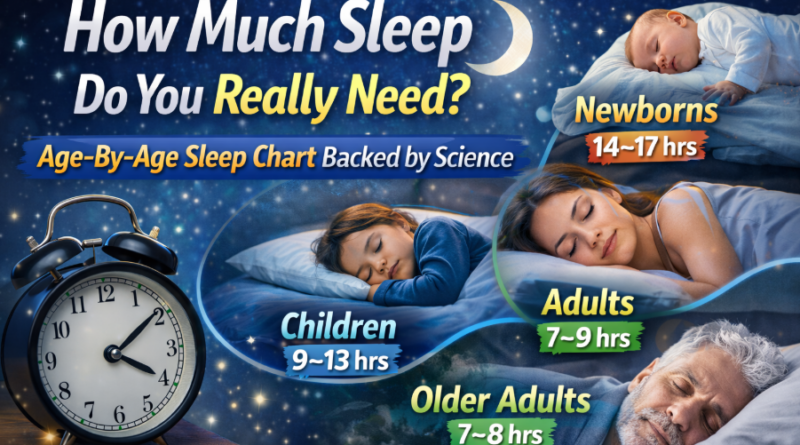
Recommended Sleep Duration by Age
How Much Sleep Adults Really Need
Signs You’re Not Getting Enough Sleep
The Health Risks of Sleep Deprivation
Can You Sleep Too Much?
Factors That Affect Your Sleep Needs
How to Know If You’re Getting Enough Sleep
Tips to Improve Sleep Quality
Frequently Asked Questions (FAQ)
Why Sleep Is Essential for Your Health
Sleep is not simply “rest.” It is an active biological process during which the body performs critical maintenance tasks.
During sleep, your body:
Repairs cells and tissues
Strengthens the immune system
Consolidates memory and learning
Regulates hormones that control appetite and metabolism
Restores brain function and mental clarity
According to health experts, insufficient sleep can impair memory, reduce concentration, weaken immunity, and increase the risk of chronic diseases.
Studies also link long-term sleep deprivation to conditions such as:
Heart disease
Obesity
Diabetes
Depression
Weakened immune function
Because of these risks, sleep is now considered one of the three pillars of health, alongside diet and physical activity.
Recommended Sleep Duration by Age
Sleep requirements change throughout life. Children and teenagers need more sleep because their bodies and brains are still developing.
Below are widely accepted sleep recommendations from global health authorities.
| Age Group | Recommended Sleep |
|---|---|
| Newborn (0–3 months) | 14–17 hours |
| Infant (4–12 months) | 12–16 hours |
| Toddler (1–2 years) | 11–14 hours |
| Preschool (3–5 years) | 10–13 hours |
| School Age (6–12 years) | 9–12 hours |
| Teenagers (13–18 years) | 8–10 hours |
| Adults (18–64 years) | 7–9 hours |
| Older Adults (65+) | 7–8 hours |
These ranges are based on population research linking sleep duration with optimal physical and mental health outcomes.
How Much Sleep Adults Really Need
For most adults, 7 to 9 hours of sleep per night is considered optimal.
Health experts generally recommend at least 7 hours of sleep for adults to maintain good health and cognitive performance.
However, individual needs can vary. Some people may function well on:
7 hours – common among highly efficient sleepers
8 hours – the typical average
9 hours – often needed by physically active individuals
Your ideal sleep duration depends on factors such as:
Physical activity level
Stress levels
Age
Genetics
Overall health
Signs You’re Not Getting Enough Sleep
Many people believe they are functioning normally despite sleep deprivation. However, the body often shows clear warning signs.
Common symptoms of insufficient sleep include:
Daytime fatigue
Difficulty concentrating
Irritability and mood swings
Frequent headaches
Poor memory
Increased cravings for sugary foods
Reduced productivity
Adults who consistently sleep less than 7 hours are more likely to experience cognitive difficulties and weakened immune function.
The Health Risks of Sleep Deprivation
Chronic sleep deprivation can have serious long-term consequences.
Research shows that people who consistently sleep too little have higher risks of:
1. Heart Disease
Sleep helps regulate blood pressure and cardiovascular function.
2. Obesity
Sleep deprivation disrupts hormones that control hunger and metabolism.
3. Diabetes
Lack of sleep interferes with insulin regulation.
4. Mental Health Disorders
Poor sleep increases the risk of anxiety and depression.
5. Reduced Immunity
Sleep supports immune system function and helps the body fight infections.
Because of these risks, experts emphasize that sleep should be treated as a non-negotiable health priority.
Can You Sleep Too Much?
Yes — sleeping too much can also be a problem.
For adults, regularly sleeping more than 9 hours per night may be associated with certain health issues, including:
Chronic fatigue
Depression
Low physical activity
Underlying medical conditions
However, sleeping longer occasionally is normal, especially when:
Recovering from illness
Catching up on lost sleep
Experiencing high physical exertion
Factors That Affect Your Sleep Needs
Although age is the main factor determining sleep requirements, several other factors influence how much sleep you need.
1. Lifestyle
Stress, work schedules, and screen time can affect sleep duration and quality.
2. Sleep Quality
Interrupted sleep reduces its restorative benefits.
3. Physical Activity
Athletes and active individuals may require more sleep for recovery.
4. Health Conditions
Sleep disorders such as insomnia or sleep apnea can impact sleep quality.
5. Genetics
Some people are naturally short sleepers or long sleepers due to genetic differences.
How to Know If You’re Getting Enough Sleep
The best indicator of healthy sleep is how you feel during the day.
You are likely getting enough sleep if you:
Wake up feeling refreshed
Stay alert throughout the day
Do not rely heavily on caffeine
Maintain good concentration and productivity
If you frequently feel tired despite adequate sleep, you may need to improve sleep quality or consult a healthcare professional.
Tips to Improve Sleep Quality
Getting enough sleep is not just about hours — quality matters too.
Here are practical strategies to improve your sleep:
Maintain a consistent sleep schedule
Go to bed and wake up at the same time every day.
Limit screen time before bed
Blue light from phones and computers interferes with melatonin production.
Avoid caffeine late in the day
Caffeine can stay in the body for several hours.
Create a sleep-friendly environment
Keep your bedroom dark, quiet, and cool.
Exercise regularly
Physical activity promotes deeper and more restorative sleep.
Establish a bedtime routine
Reading, meditation, or relaxation techniques can help signal your body that it’s time to sleep.
Frequently Asked Questions (FAQ)
Is 6 hours of sleep enough?
For most adults, 6 hours is not enough. Experts recommend at least 7 hours of sleep per night for optimal health.
Is 8 hours of sleep necessary?
Eight hours is often considered ideal, but the healthy range for adults is 7–9 hours depending on individual needs.
Why do teenagers need more sleep?
Teenagers require 8–10 hours of sleep because their brains and bodies are still developing.
Does sleeping more improve health?
Sleeping enough supports overall health, but excessive sleep does not necessarily provide additional benefits and may indicate underlying issues.
Final Thoughts
Sleep is not a luxury — it is a biological necessity.
For most adults, 7 to 9 hours of sleep per night provides the optimal balance for physical health, mental clarity, and emotional wellbeing. However, the exact amount you need depends on your age, lifestyle, and individual biology.
Prioritizing consistent, high-quality sleep can dramatically improve your health, productivity, and quality of life.
If you struggle with sleep regularly, consider consulting a healthcare professional to identify potential sleep disorders or lifestyle factors affecting your rest.
Good sleep also supports metabolism and weight control. See our guide on how to lose weight naturally.
If snoring disrupts your sleep, read our guide on how to stop snoring naturally.
Regular physical activity can significantly improve sleep quality. Learn how to start working out safely.
