
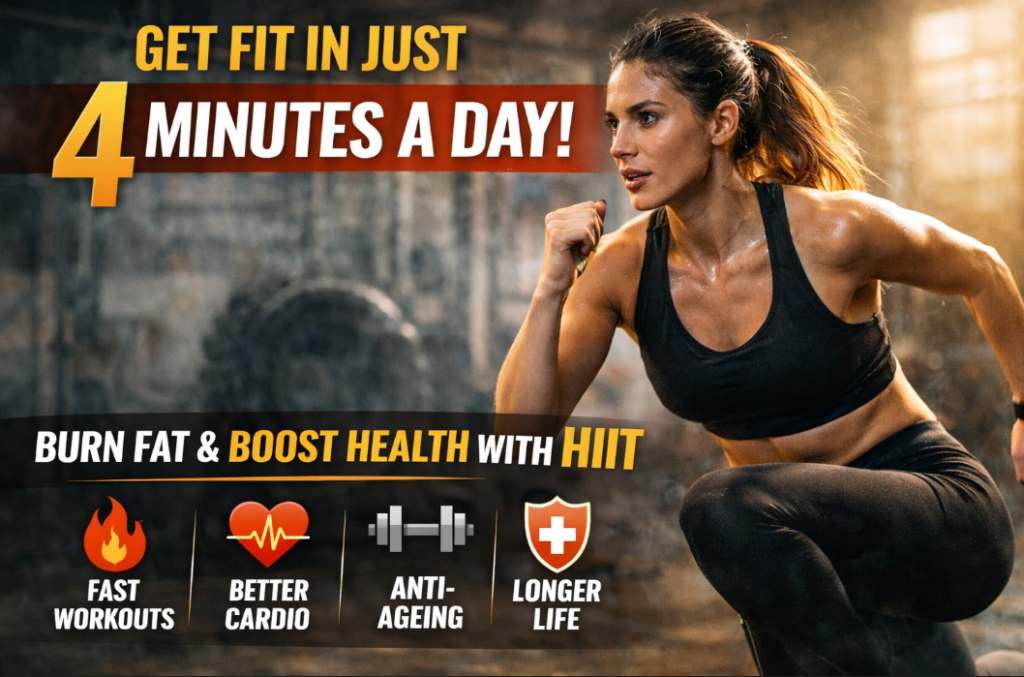

Get Fit in Just 4 Minutes a Day: The Power of HIIT for Faster Results
For years, the mantra in fitness has been “slow and steady wins the race.” But new research shows that it’s possible to get the same results in just a fraction of the time. Canadian researchers at Queen’s University found that exercising for only 4 minutes a day can be as effective as 30 minutes of traditional cardio—if you do the right type of exercise. Get Fit Fast with HIIT.
Enter HIIT (High-Intensity Interval Training), a method that’s changing the way people approach fitness. With shorter, more intense workouts, you can burn more fat, improve energy delivery, and strengthen your body in record time.
What is HIIT?
High-Intensity Interval Training (HIIT) involves performing a series of exercises at maximum effort for short periods, followed by brief rest intervals. Sometimes called Metabolic Conditioning (MetCons), HIIT trains your whole body, elevates your heart rate, and pushes your metabolism into overdrive.
The result? You burn more calories, improve cardiovascular health, and gain the benefits of longer workouts in just minutes.
Why HIIT Works
According to Dr Anton van Rensburg, the magic of HIIT lies in reaching the aerobic threshold, a “sweet spot” that stimulates growth hormone production. By age 30, most people naturally have lower growth hormone levels, which can lead to muscle loss, fat gain, slower healing, and increased risk of cardiovascular disease.
Even short HIIT sessions can counter these effects by:
Reducing mortality rates
Increasing bone density
Lowering the risk of heart disease
Target heart rates:
Under 30 years: 170–180 beats per minute
Over 30 years: 160–170 beats per minute
Tip: Always check with your doctor before starting, and avoid pushing your heart rate close to 200 BPM.
Types of HIIT Exercises
There are several forms of HIIT that you can try, depending on your age and fitness level:
1. Running and Cycling:
These classic HIIT exercises elevate your heart rate while engaging multiple muscle groups.
2. Sprint Interval Training (SIT):
Best suited for young, healthy individuals, SIT involves 4–6 “all-out” 30-second sprints on a bike or treadmill, with 4.5 minutes of low-intensity recovery in between.
3. HIIT for Everyone:
Perfect for beginners and experienced exercisers alike:
15–60 second bursts of high-intensity movement (running, jumping, fast cycling, or dancing)
2–4 minutes of low-intensity recovery (walking, slow cycling)
Can be done at home, at the gym, or outdoors
How Much HIIT is Enough
The World Health Organization (WHO) recommends 3–5 hours of endurance training per week for optimum health. But studies in the Journal of Physiology show that the same benefits can be achieved in a third of the time using HIIT or SIT.
This makes exercise accessible for everyone, regardless of schedule or fitness level. A few minutes a day can help prevent chronic diseases like diabetes, hypertension, obesity, and cardiovascular issues.
Benefits of HIIT
Regular HIIT workouts can help you:
Burn more calories and fat in less time
Strengthen the heart and improve circulation
Stimulate growth hormone for anti-ageing effects
Reduce the risk of chronic diseases
Increase overall energy and endurance
Tips for Beginners
Start slowly and gradually increase intensity
Monitor your heart rate to stay within safe limits
Mix different exercises to avoid boredom
Consistency matters more than duration
Conclusion
Everything we know about exercise is changing, and HIIT proves that you don’t need hours at the gym to stay healthy. With just a few minutes a day, you can achieve full-body fitness, boost metabolism, and protect your heart.
Start today with short, intense sessions, and gradually build your stamina. Your body—and your schedule—will thank you.
RELATED :